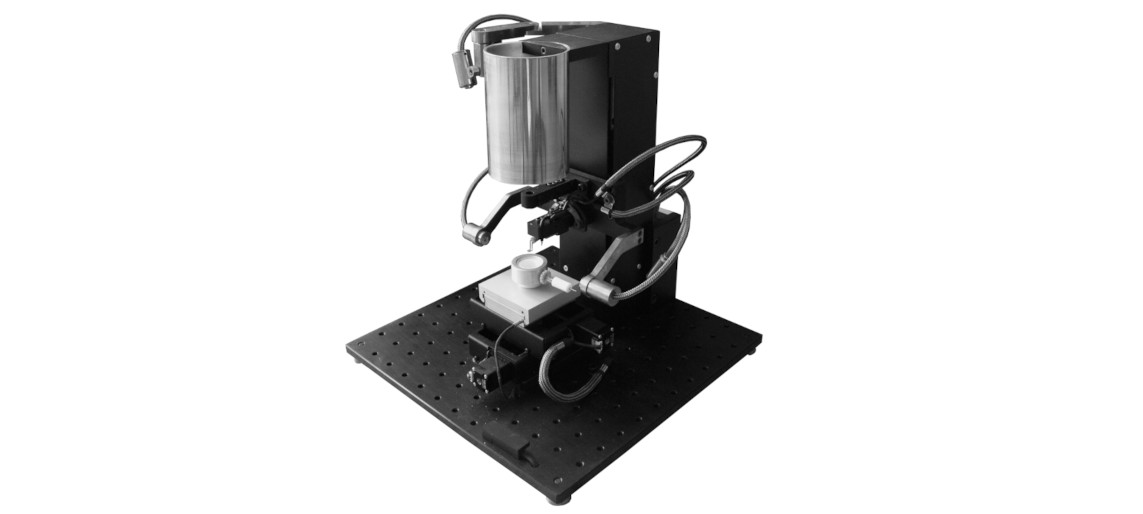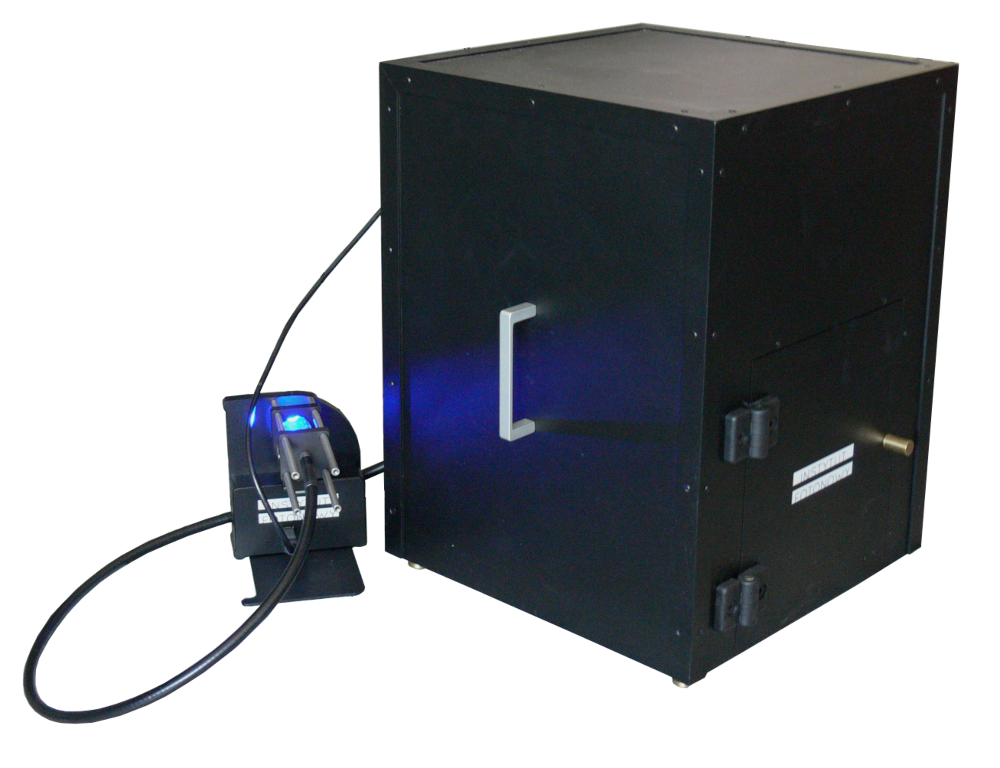

The Electrochemical Kelvin Probe measures CPD (Contact Potential Difference) value and evaluates Work Function of electrochemical samples in contact with electrolyte.
Measurements of work function is particularly useful in semiconductor physics because they provide a position of Fermi level in examined material.
The Electrochemical Kelvin Probe, when coupled with a light source, measures Surface Photovoltage (SPV) of a sample when dry or wet interface is illuminated.
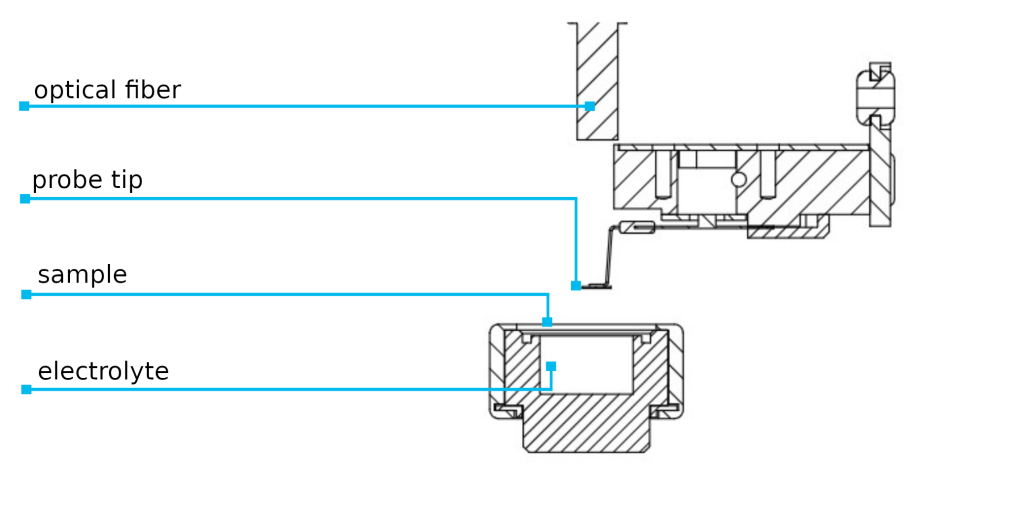
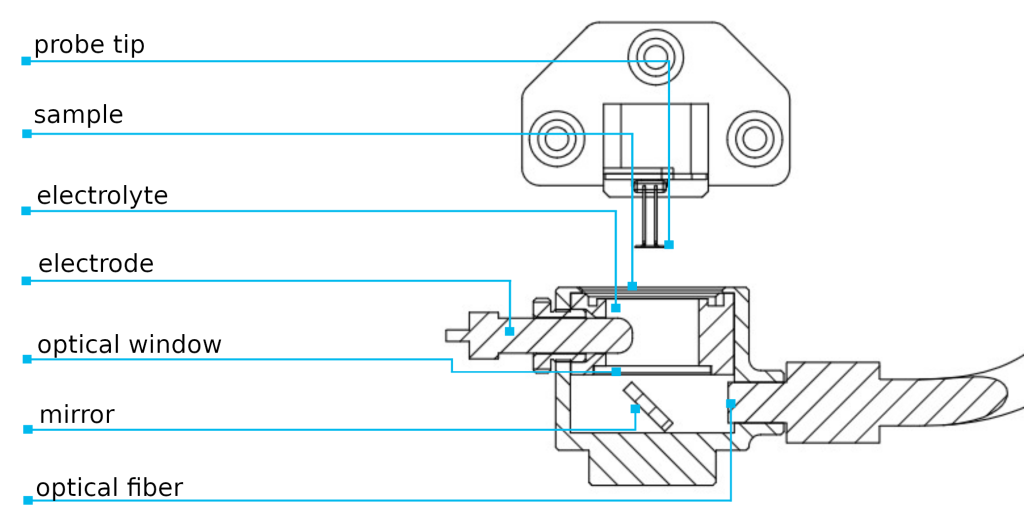
Electrochemical Kelvin Probe comes with a dedicated electro-chemical cuvette. There, a sample is floating on an electrolyte. The Kelvin probe tip approaches the exposed top side of the sample. This way, there is no electrolyte layer of top of the sample that can affect the measured CPD. Still, the bottom side of the sample remains in contact with an electrolyte.
Light can illuminate either top surface of the sample or bottom sample-electrolyte interface.
A possible chemical reaction on the sample-electrolyte interface will affect the measure value of CPD. Also a choice of Reference Electrode (RE) selected for the measurement will offset the CPD.
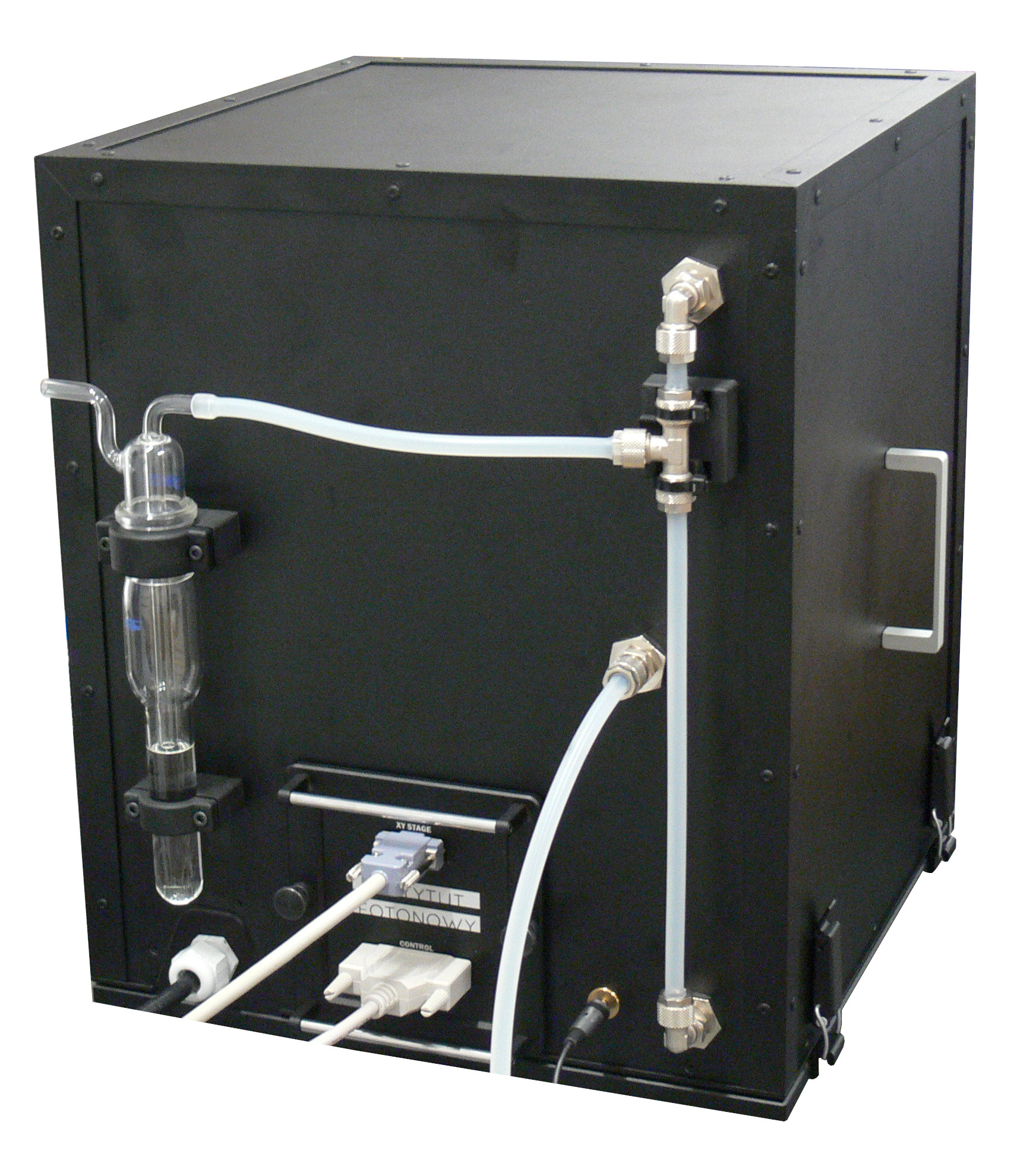
Optionally, the Electrochemical Kelvin Probe may be equipped with the inert gas flow system to provide neutral environment inside the Faraday’s cage.
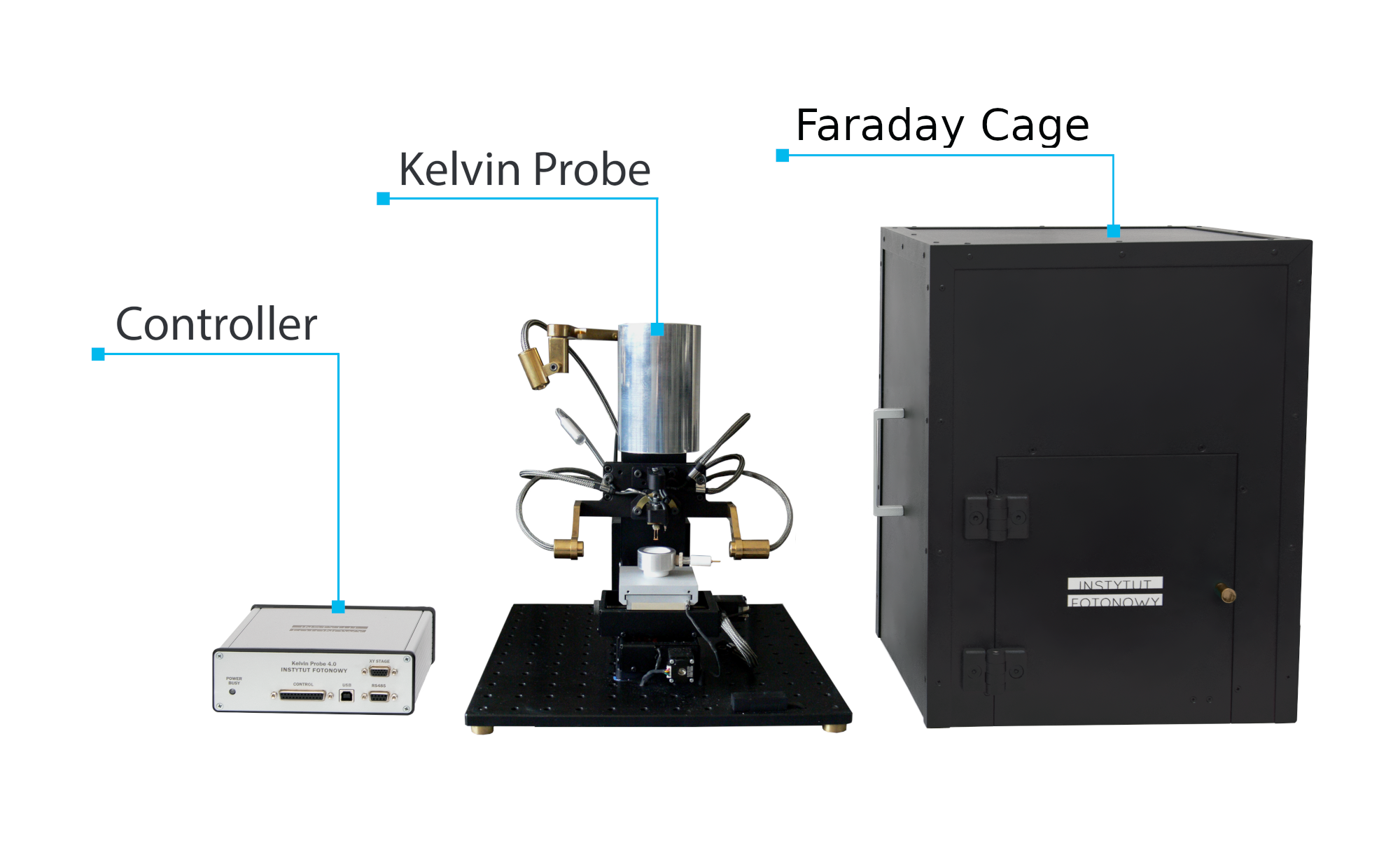
The Electrochemical Kelvin Probe set consists of:
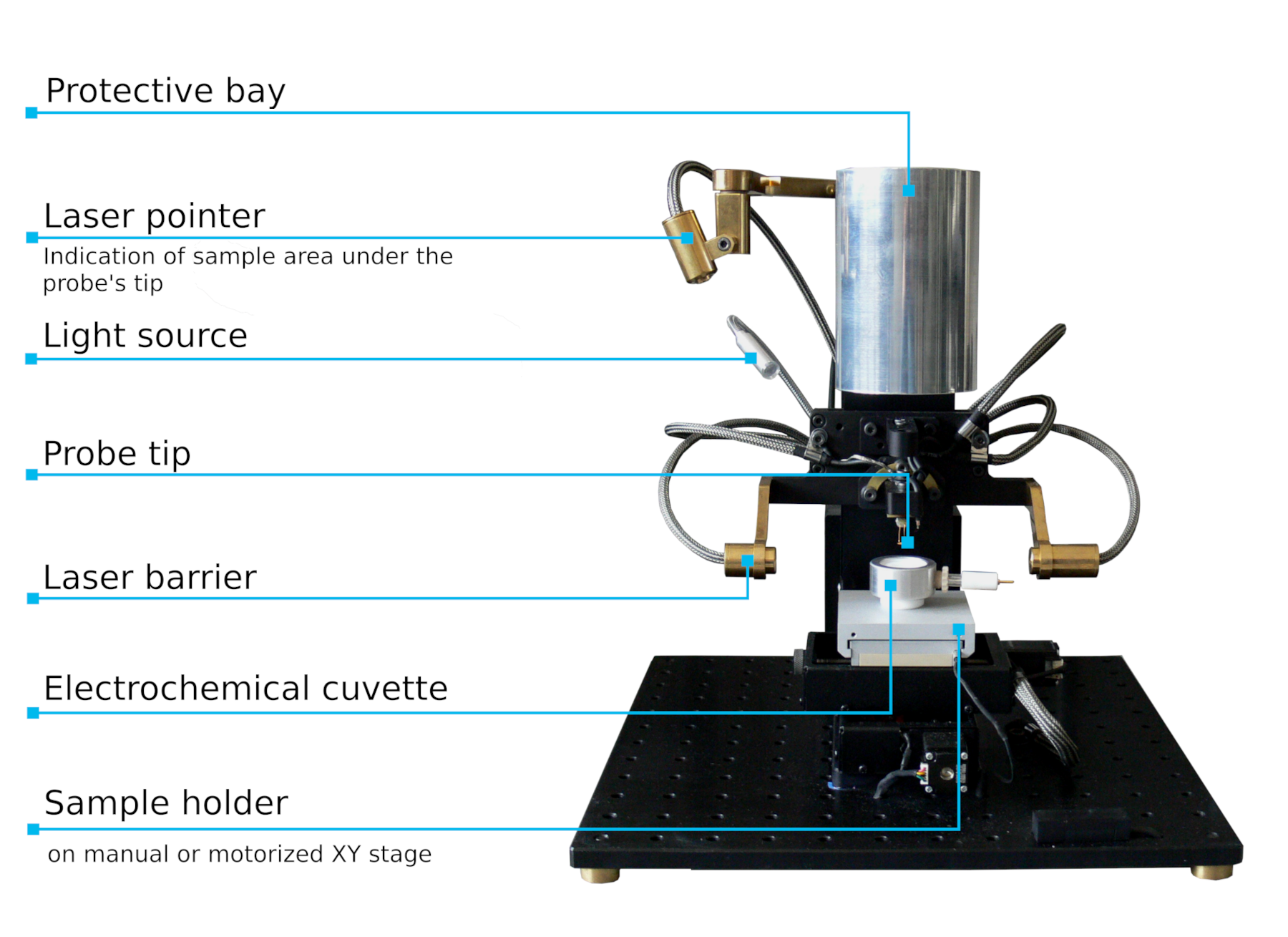
The Electrochemical Kelvin Probe instrument is equipped with:
click the picture to enlarge
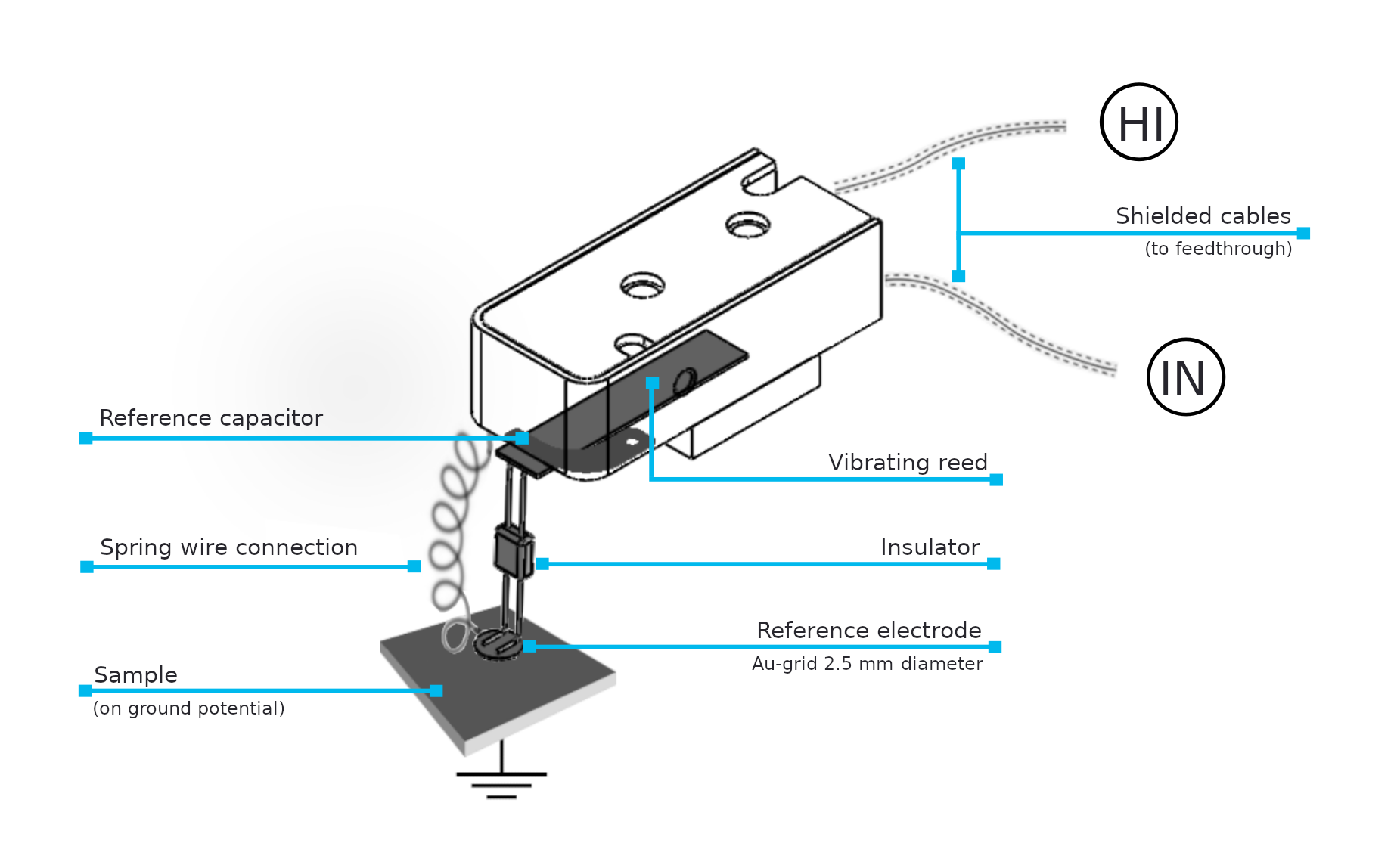
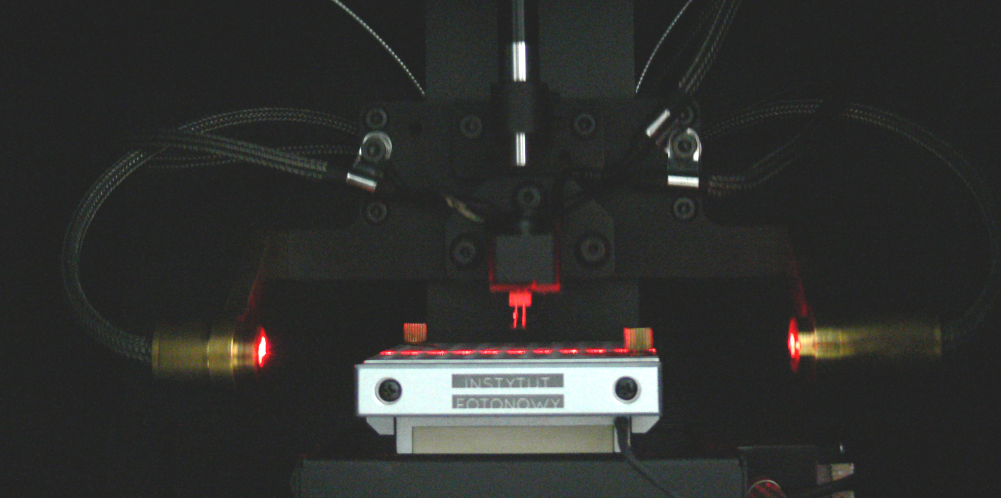
The most important part of the Kelvin Probe instrument is the Probe Tip. The probe is fully designed and manufactured by Instytut Fotonowy. The reference electrode is made of Au mesh of 2.5 mm diameter. It provides high signal to noise ratio, even from a distance of 0.5 mm above the sample. Thus, it does not matter if the examined sample surface is rough or polished. The tip oscillations are generated with an electromagnet.
click the picture to enlarge
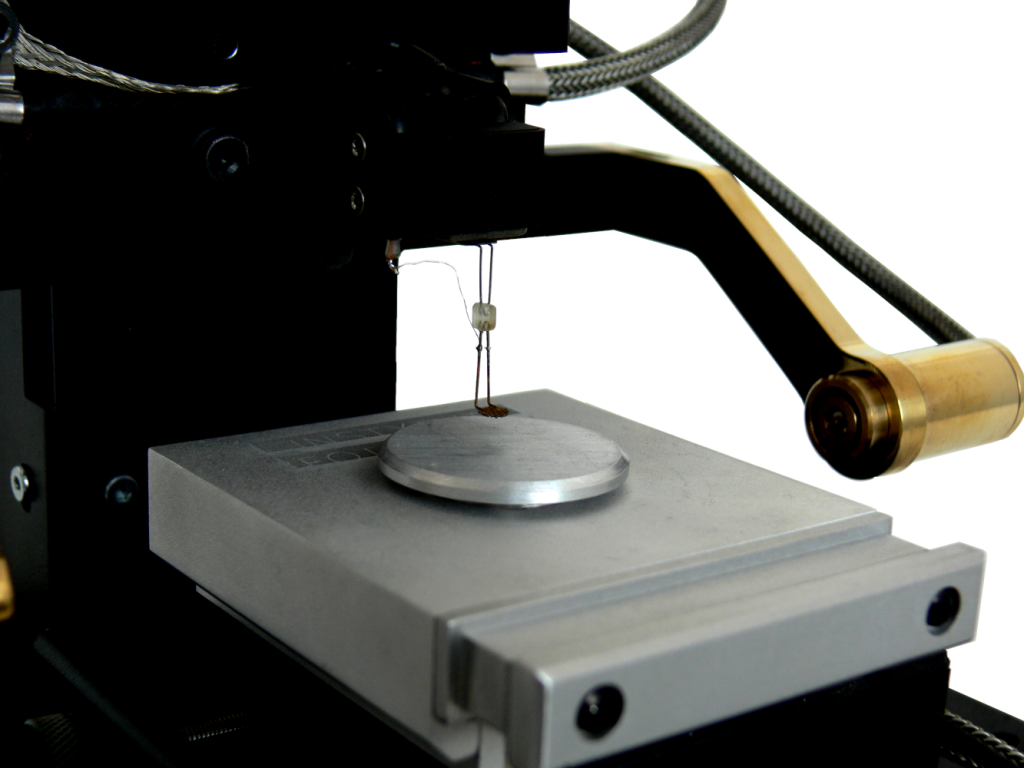
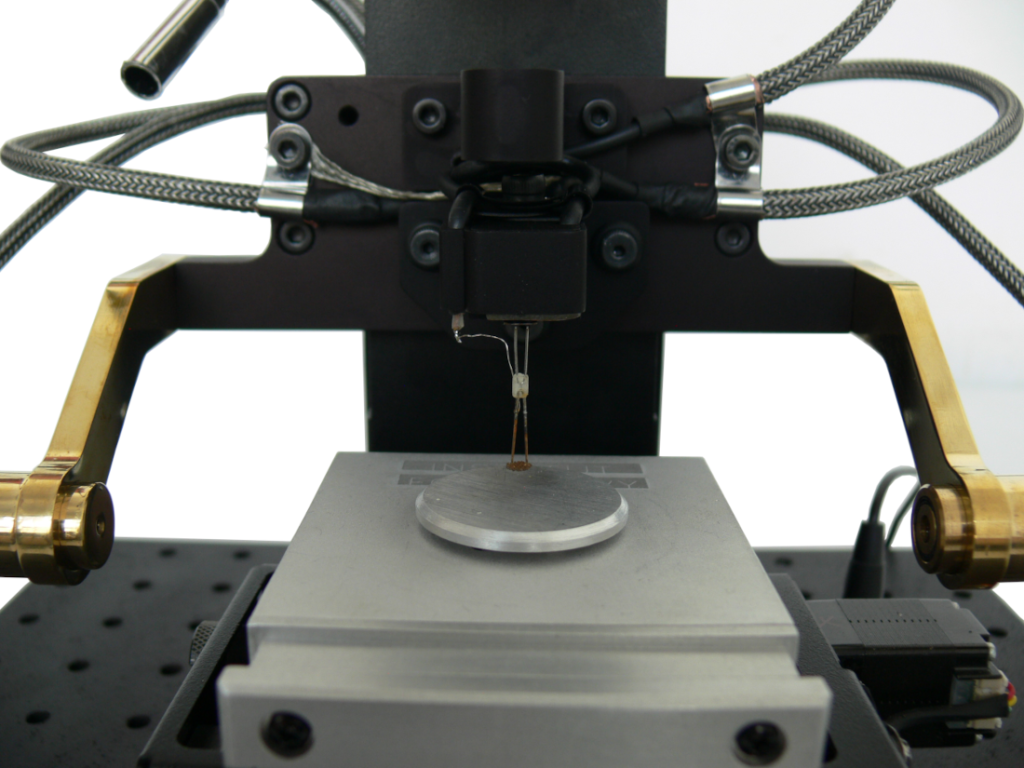
The key element of the Electrochemical Kelvin Probe is the Electrochemical cuvette set, where the sample is placed directly on the top of the cuvette.
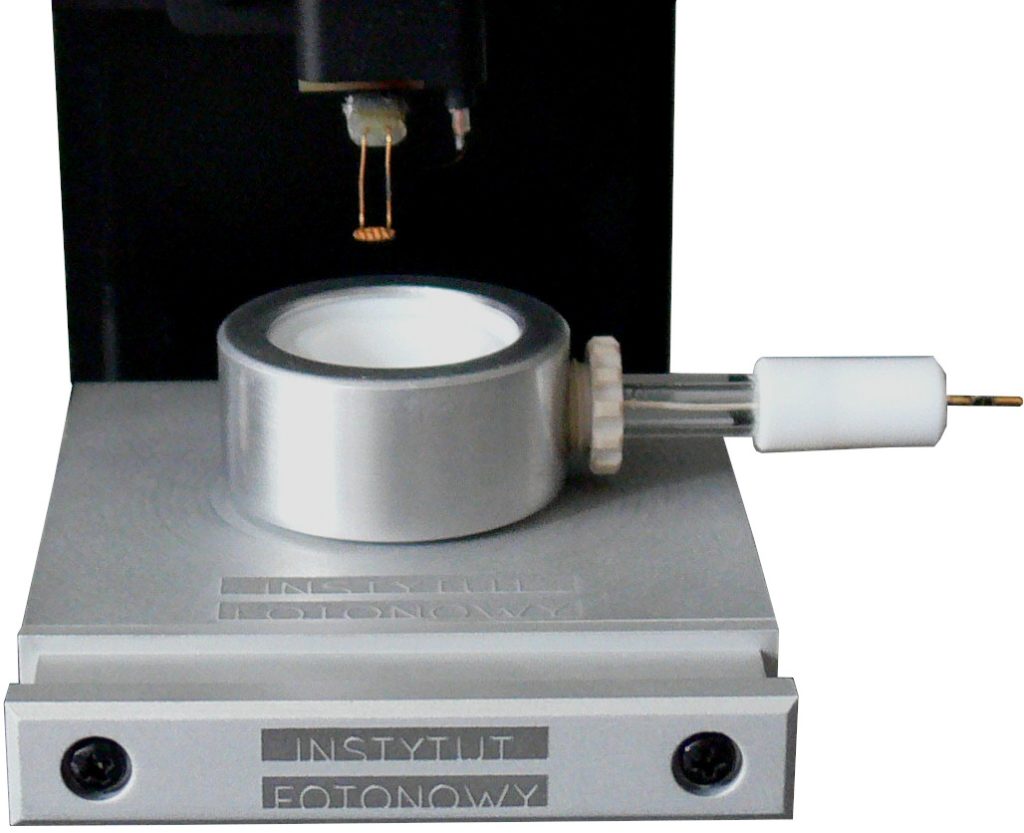
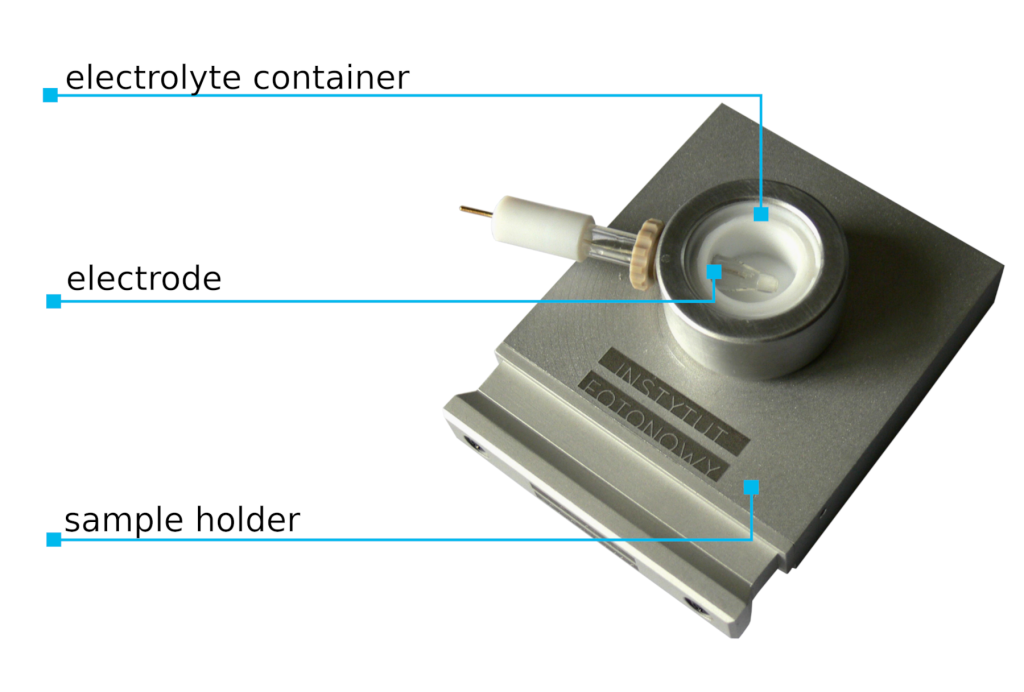
Although you may use any light source at your disposal to provide sample illumination, it is convenient to opt for our LED Revolver or Xenon Lamp with a Monochromator because FotoGUI software handles them already and carries out automatic experiments with LED switching or wavelength scans.
click the picture to enlargeLight delivery may be performed in two manners: from the top, where a sample’s surface is illuminated and from the bottom where the sample-electrolyte interface is exposed to the radiation.
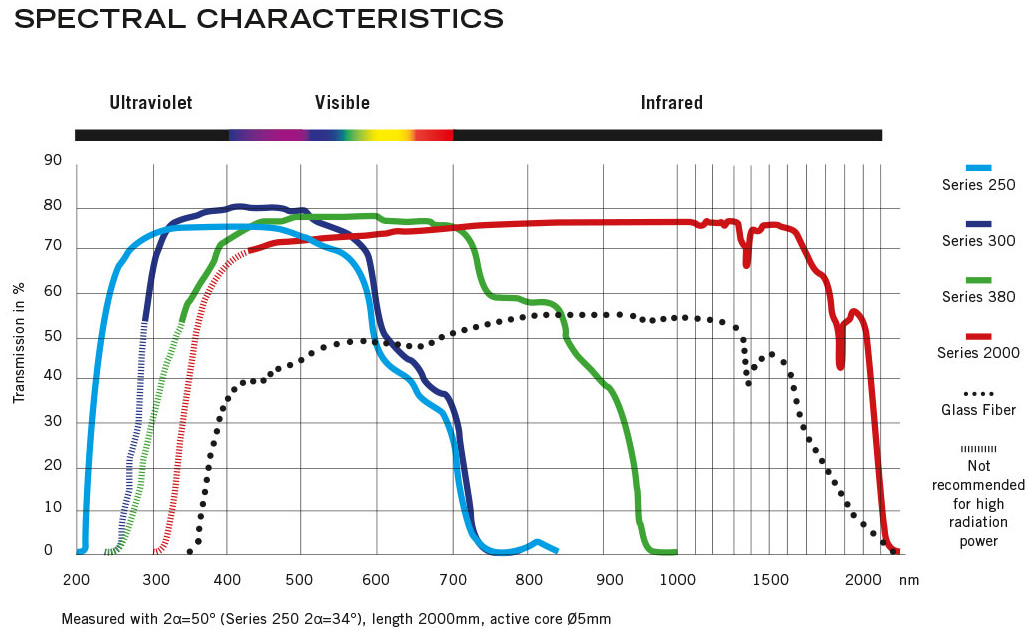
Several types of liquid lightguides from Lumatec may be used to provide the sample illumination.
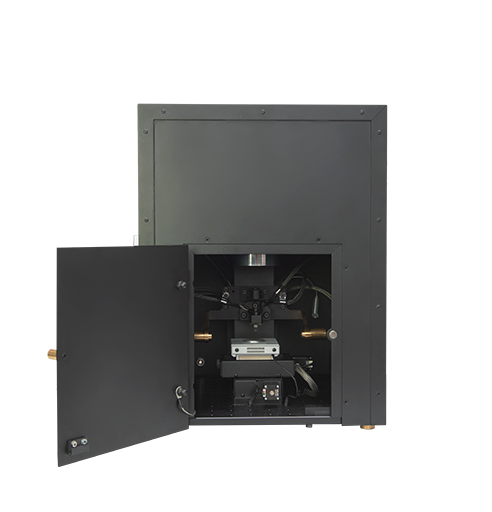
A Faraday Cage covers the entire instrument, shielding the setup from the ambient light and electromagnetic fields.
click the picture to enlarge
Since measurement of the CPD is often sensitive to environmental factors like temperature, humidity, dust and chemical contaminants, Kelvin Probe may be placed inside the hermetic version of the Faraday Cage filled with the inert gas.
click the picture to enlarge
The Kelvin Probe is equipped with the Laser barrier system. It automatically detects the sample top edge. Each time the probe approaches the sample being examined, an accurate distance between the sample surface and the Probe Tip is measured with 20 µm precision.
click the picture to enlarge


电化学开尔文探针可以测量接触电位差(CPD)值,并评估需要电解质提供电接触的电化学样品的功函数。这种测量不仅可以在样品表面的单个点上进行,而且可以扫描整个样品表面。
功函数的测量在半导体物理学中特别有用,因为它提供了被检查材料费米能级的位置。
配备光源的开尔文探针使得可以检查样品的电子表面态。电子表面态在电荷转移中起着重要作用,这对于光伏材料和光电化学尤为重要。
电化学开尔文探针是一种创新的设置,配备专用的电化学比色皿。通过提供新型的比色皿,该设置使得被检测表面既与电解质接触,又位于比色皿顶部,从而在满足探针主要与样品表面相互作用的要求下进行CPD测量。同时,样品仍然与电解质接触。
开尔文探针可以配备光源,从而可以检查样品的电子表面态。
将光传送到样品可采用两种方式:从上方照明样品表面,或从下方照射样品-电解质界面。
通过比较干燥样品和与电解质接触的样品的CPD,可以探索可能发生的化学反应维持的电化学电池电压,这种反应发生在样品和参考电极之间。
可选地,电化学开尔文探针可以配备惰性气体流系统,以在法拉第笼内提供中性环境。
电化学开尔文探针仪器配备有:
开尔文探针仪器最重要的部分是探针头。探针完全由Instytut Fotonowy设计和制造。参考电极由直径为2.5毫米的金网制成。它提供了高信噪比,即使在距离样品表面0.5毫米的位置也是如此。因此,无论被检查的样品表面是粗糙还是光滑都无关紧要。探针尖的振动是由电磁铁产生的。
点击图片以放大
电化学比色皿套装是电化学凯尔文探针的关键元素,样品直接放置在比色皿顶部。
光传递可以通过两种方式进行:从顶部,其中样品表面被照明,以及从底部,其中样品与电解质界面暴露于辐射之下。